Mental Clarity
Taking regular breaks can make it easier to return to tasks with attention and a clearer sense of priority.
Understanding the role of rest in everyday life can help you create routines that support well-being, focus, and sustained energy throughout the day.
Learn MoreRest is a fundamental part of daily life. When we allow our bodies and minds time to pause, we create space for restoration and mental clarity. Integrating rest into your schedule is not about doing less — it is about creating balance.
Many people overlook the importance of intentional downtime. By recognizing rest as a vital component of your day, you can approach tasks with renewed focus and a clearer perspective.

Incorporating rest into your routine can help you keep a more consistent pace throughout the day.
Taking regular breaks can make it easier to return to tasks with attention and a clearer sense of priority.
Short pauses between activities can help you avoid overloading your routine and encourage a more comfortable rhythm.
Downtime gives you a chance to reset before demanding conversations, deadlines, or decisions.
Planned breaks may help distribute effort more evenly so your day feels more manageable from start to finish.
Stepping away from tasks for a moment can open space for new ideas and fresh perspectives.
When rest is built into your schedule, it is easier to maintain routines that are realistic and sustainable.
General lifestyle observations about rest and daily activity patterns.
Rest is not one-dimensional. Exploring different forms of rest can help you find what works for your lifestyle.
Activities like sleeping and napping that allow your body and mind to enter a state of minimal activity and recovery.
Gentle, restorative activities such as walking, stretching, or light movement that refresh without adding strain.
Stepping away from complex or demanding cognitive tasks to let your mind reset through quiet reflection or mindfulness.
Engaging with art, nature, or beauty in a way that inspires without demanding output, fostering renewed imagination.
Time spent alone or with supportive people to recharge from socially demanding interactions and restore emotional energy.
Reducing sensory input — dimming lights, silencing devices, and finding quiet spaces — to counter overstimulation.
"A steady routine includes both focused work and intentional pauses to reset."
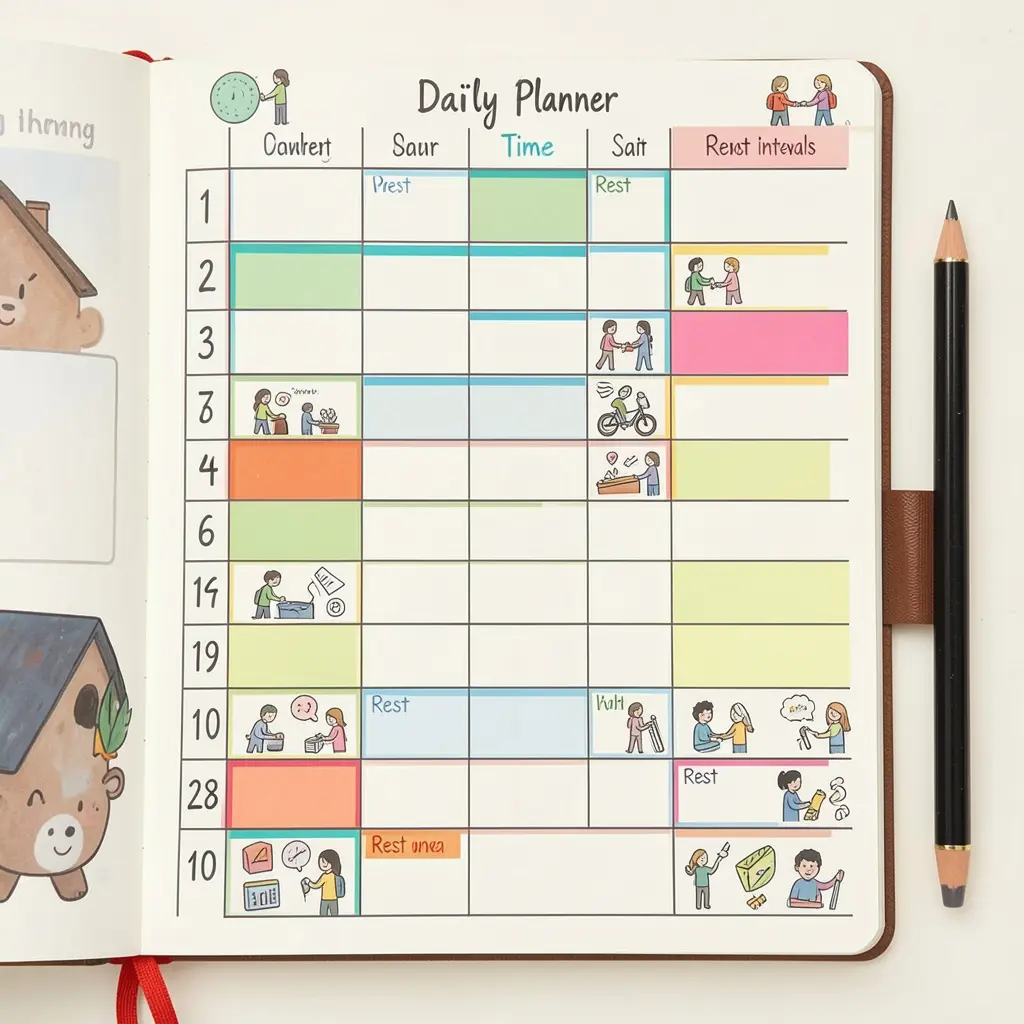
Set reminders to pause for five to ten minutes between tasks throughout your day.
Designate a quiet, comfortable area in your home or workplace for short rest periods.
Reducing screen exposure in the evening may support better transition into restful sleep.
A few minutes of focused breathing can serve as a quick mental reset during busy periods.
Going to bed and waking at similar times each day supports your natural rest patterns.
Noticing early signs of overload can help you pause and reset before stress builds up.
Contrary to the belief that constant activity leads to higher output, many productivity frameworks emphasize the importance of regular rest intervals. The idea of working in focused blocks followed by intentional breaks is a widely discussed approach.
By viewing rest not as lost time but as an investment in your capacity to perform, you can approach your daily responsibilities with a more sustainable mindset. Balance is personal — what matters is finding a rhythm that supports your unique lifestyle.

Explore common questions about incorporating rest into daily life.
Have questions or thoughts about the content on this website? Feel free to reach out using the form or the contact details below.
Alyssa Grant
touch@phraxellxol.world
+1 646-560-8080
2 East 15th St, New York, NY 10003, USA
This website provides general lifestyle information only and does not constitute professional or medical advice. The content presented here is for informational purposes and should not be used as a substitute for consultation with qualified professionals. Always seek appropriate professional guidance for your individual circumstances.